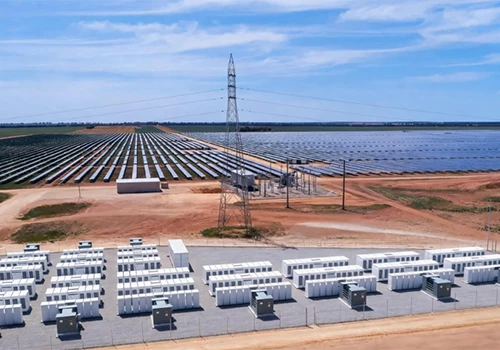


Source: cleanenergynews.ihsmarkit.com

India intends to quintuple the size of a subsidy scheme for domestic solar photovoltaic (PV) module makers, pushing forward with the country's Atmanirbhar Bharat (Self-reliant India) strategy for decarbonizing its economy.
To help counter climate change, the world's third largest GHG emitter is aiming to have 500 GW of renewable energy capacity installed by 2030—including at least 280 GW of solar—before reaching emissioni nette-zero by 2070.
"This decarbonization strategy opens up huge employment opportunities and will take the country on a sustainable development path," Indian Finance Minister Nirmala Sitharaman told the country's parliament in il discorso sul bilancio annuale 1 February.
Nel budget da aprile 2022 a marzo 2023, Nuova Delhi assegnerebbe ulteriori 19.500 crore di Rs (2,61 miliardi) al programma Production Linked Incentive (PLI) per promuovere la produzione nazionale di moduli fotovoltaici, ha affermato Sitharaman.
Il PLI, iniziato con Rs 4.500 crore (600 milioni) nell'ultimo budget annuale, offre sussidi a stabilimenti di moduli selezionati in base alle loro vendite, qualità del prodotto e contenuto locale.
IHS Markit estimates 80 percent -90 percent of India's solar components are imported, with China the main supplier. Government figures show India currently has annual production capacity of just 2.5 GW for PV cells and 9-10 GW for modules.
But the initial PLI budget will help drive the expansion of India-based manufacturers, according to the National Investment Promotion Facilitation Agency (NIPFA), and India's capacity of integrated module plants that can convert wafer-ingots to modules is expected to raggiungere 10 GW by the end of March 2023.
The government agency expects India's annual module manufacturing capacity to expand by 30-35 GW between 2021 and 2025, in part driven by strong demand and policy incentives.
New Delhi is hoping to generate employment opportunities and attract foreign investment as a result of expanding the PV manufacturing sector, said Amit Manohar, specialista in investimenti presso la NIPFA.
"After a decade of innovation and cost reductions, the solar energy sector has evolved to a major source of energy, and it could potentially serve 30 percent or more of India's electricity demand by 2030," Manohar said.
Strategia di Atmanirbhar Bharat
Since 2020, Indian Prime Minister Narendra Modi has been promoting the Atmanirbhar Bharat strategy in several sectors—including renewables—to boost domestic manufacturing capacity in a post-COVID recovery.
Nel budget da aprile 2021 a marzo 2022, Nuova Delhi ha iniettato Rs 1,{3}} crore (133 milioni) nella Solar Energy Corporation of India e Rs 1.500 crore (200 milioni) nell'Agenzia indiana per lo sviluppo dell'energia rinnovabile. Le entità sono responsabili della gestione di vari programmi di incentivi sponsorizzati dal governo centrale-.
Da aprile 2021, solo le aziende in un-elenco di produttori di moduli approvato interamente dall'India possono partecipare a gare solari sponsorizzate dal governo centrale.
Inoltre, il governo prevede di imporre un dazio doganale di base del 40% sui moduli solari importati e del 25% sulle celle a partire da questo aprile.
Kashish Shah, an analyst at the Institute for Energy Economics and Financial Analysis, suggested the policy initiatives' effects are likely to be compounded by problemi della catena di approvvigionamento in the global PV industry. "Module manufacturing in India has never been more viable," ha detto Shah last December.
Con i forti segnali politici, alcune delle principali aziende indiane hanno annunciato grandi programmi di investimento nelle rinnovabili che pongono una forte attenzione all'energia solare.
Avendo fissato l'obiettivo di costruire 100 GW di capacità solare entro il 2030, l'anno scorso Reliance Industries ha dichiarato che lancerà un impianto di pannelli fotovoltaici integrato a Jamnagar dopo aver acquisito REC Group per 771 milioni. L'impianto dovrebbe avere una capacità iniziale di 4 GW all'anno prima di arrivare a 10 GW.
In January, Reliance, India's largest publicly traded company by market capitalization, announced iniziative di investimento rinnovabile totaling Rs 595,500 crore (80 billion), and a substantial proportion of the money will be used to develop manufacturing facilities for PV modules, electrolyzers, batteries, fuel cells, as well as hydrogen and low-carbon energy projects in Gujarat over the next 10-15 years.
Rival conglomerate Gruppo Adani plans to invest 50 billion to 70 billion in decarbonization projects in the next decade, including 20 billion in renewable energy generation. It aims to have a solar manufacturing capacity of 2 GW per annum by the end of March 2023.
While the government's policies are prompting more investment in domestic manufacturing, IHS Markit Renewable Analyst Ankita Chauhan warned of short-term disruptions to solar installations in the country.
"Current domestic manufacturing is not sufficient to meet the domestic demand, and it may take another three to five years to build it up," said Chauhan, adding that the policies favoring Indian manufacturers will push up overall costs, and restrict vendor choices for procurement and project timelines.
Mostrarmi il denaro
Nell'ultimo bilancio annuale, il governo indiano ha anche affermato che migliorerà il riciclaggio, promuoverà l'agroforestazione, adotterà una politica di sostituzione delle batterie per i veicoli elettrici laddove le reti di ricarica non siano praticabili e sostituirà il 5% -7% del carbone utilizzato nelle centrali termoelettriche con pellet di biomassa, tra le altre misure di decarbonizzazione.
Sitharaman said India will issue sovereign green bonds in the coming fiscal year to fund "green infrastructure" in the public sector, without elaborating.
Official data showed India had 150.5 GW of renewable capacity installed in November when large hydropower projects were taken into account. This means annual capacity additions of 40-50 GW will be required to meet the government's 500 GW target by 2030.
"On a very conservative capital funding calculation the investment required for achieving the target is approximately 210 billion," said Manohar, adding that both public and private stakeholders need to contribute.
In una nota pubblicata il mese scorso, gli analisti di IHS Markit hanno stimato che l'India avrà bisogno di oltre 28 miliardi di investimenti annuali per raggiungere l'obiettivo del 2030, rispetto a una spesa media di 7 miliardi negli ultimi cinque anni.
"Project developers are tapping international capital markets to access low-cost financing, but the government needs to improve regulatory transparency, introduce a uniform green taxonomy, and provide targeted interventions to improve access to low-cost international capital," the note said.
Oltre a investire denaro in una capacità di generazione a basse-anidride carbonica, i ricercatori del Lawrence Berkeley National Laboratory negli Stati Uniti hanno affermato che le parti interessate indiane dovranno investire 40 miliardi in 63 GW di accumulo di batterie per garantire la stabilità della rete.
Still, they believe renewable expansion will be the cheapest overall option in meeting India's rising electricity demand.
"Dramatic cost reductions over the last decade for wind, solar, and battery storage technologies position India to leapfrog to a more flexible, robust, and sustainable power system for delivering affordable and reliable power to serve demand that will nearly double by 2030," they said in uno studio published last December.